Ex-Showroom vs On-Road Price: What's the Difference?
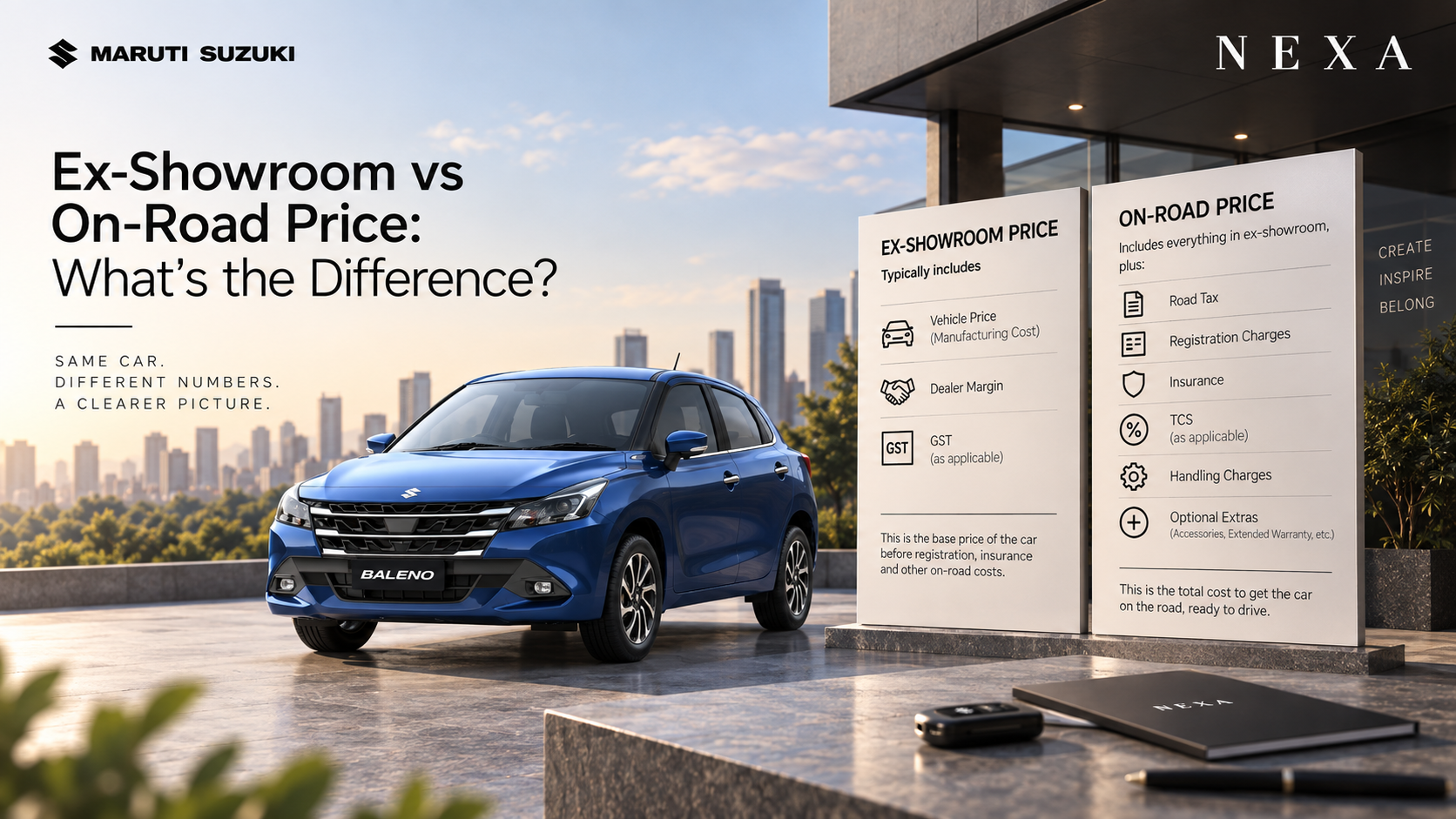
The price you see on a brochure or a website is almost never the price you actually pay at the dealership. That gap catches a lot of first-time buyers off guard, sometimes by a meaningful amount, and not understanding where it comes from makes it much harder to budget properly or know whether you're being charged fairly.
In this article, we'll explain what ex-showroom and on-road price actually mean, what goes into the difference between them, whether any of that gap is something you can reduce, and why the same car can cost differently depending on which state you're registering it in.
What Is Ex-Showroom Price?
Ex-showroom price is the price of the car itself, set by the manufacturer, before road tax, registration charges, or insurance are added.
It covers the vehicle's manufacturing cost, the dealer's margin, and GST (including compensation cess) and often freight and pre-delivery charges as well. This is the number you'll see most prominently advertised, in brochures, on websites, and in most price comparisons, because it stays largely consistent across the country, though it can vary slightly from state to state.
What Is On-Road Price?
On-road price is the total amount you actually pay to legally drive the car home, registered and insured.
It's the ex-showroom price plus every additional cost required to put the car on the road. Unlike the ex-showroom price, this figure varies depending on your state, your city, and sometimes even the specific RTO you register with.
What Makes Up the Difference Between Ex-Showroom and On-Road Price?
The difference between ex-showroom and on-road price is made up of several distinct charges. Let’s take a look at each of them and explore whether you have any room to reduce it.
1. Road tax (RTO tax)
This is usually the single largest component of the gap, calculated as a percentage of the ex-showroom price and set by each state government. It's entirely fixed by law. There's no negotiating it, and no legitimate way around paying it in the state where you register the vehicle.
States also set different rates based on the vehicle's fuel type, engine size, or price bracket, so two different cars bought in the same state can attract very different road tax. And because each state sets its own rates, two buyers purchasing the identical variant in two different states can end up with on-road prices that differ by tens of thousands of rupees.
2. Registration charges
It covers the cost of officially registering the car with the RTO, including the smart card fee and, if you're financing the car, hypothecation charges for recording the lender's interest in the vehicle. These are also fixed, set by the RTO rather than the dealership.
3. Insurance
At minimum, third-party insurance is legally mandatory, and that portion isn't optional. Comprehensive insurance, which covers your own car's damage as well, is not legally required but is what most dealerships bundle in by default.
This is genuinely one of the few areas with room to save. You can compare quotes from different insurers instead of accepting the dealership's default policy, and you can choose the coverage level and add-ons (like zero depreciation cover) based on what you actually need rather than what's bundled in.
4. TCS (Tax Collected at Source)
On cars priced above ₹10 lakh, a 1% TCS applies under Indian tax law. This is fixed and non-negotiable, though it's worth knowing it's adjustable against your income tax liability later, it isn't money lost, just collected upfront.
5. Handling and logistics charges
This is a dealer-levied charge covering the cost of transporting the car to the showroom and preparing it for delivery. Unlike the government-mandated charges above, these are set by the dealership, which means there's sometimes genuine room to negotiate them down, particularly during slower sales periods or when a dealership is competing for your business.
6. Optional extras
Other charges may include extended warranty, fabric or paint protection, accessories, and similar add-ons that are sometimes bundled into the on-road price quote by default. None of these are mandatory. Declining what you don't need is a straightforward way to bring the final number down.
A Quick Checklist Before You Pay
Before you sign anything, it's worth running through a few quick checks to make sure the on-road price you've been quoted actually adds up. Here’s a checklist for you to follow:
1. Get an itemised breakdown: Road tax, registration, insurance, TCS, and any handling fees should be listed separately, not just as a final number.
2. Compare the insurance quote: Check it against your own quote before accepting the dealership's default policy or coverage level.
3. Check for bundled extras: Confirm you actually want any extended warranty, accessories, or protection add-ons before they're included.
4. Confirm your loan covers what you expect: Ask whether it's financed against the ex-showroom price or the full on-road price, since that changes your upfront cost and EMI.
5. Verify the registration state and timeline: Make sure both match where and when you'll actually be driving the car.
Conclusion
Ex-showroom price is just the starting point, and on-road price is what you'll actually pay to legally drive the car home. Some of that gap, road tax, registration charges, and TCS, is entirely fixed and set by law, with no room to change it. Other parts, particularly insurance, handling charges, and optional extras, do have genuine room to shop around or decline. Knowing which is which means you can budget accurately from the start and avoid paying for anything you didn't actually need to.
Frequently Asked Questions
Is on-road price always higher than ex-showroom price?
Yes. On-road price always includes the ex-showroom price plus additional mandatory charges, so it's never lower and is often meaningfully higher, sometimes by 10 to 20 percent or more, depending on the state and the car.
Can a dealership charge me more than the standard on-road price?
Dealerships shouldn't add charges beyond the legitimate components covered here, but it's worth asking for an itemised breakdown of the on-road price quote so you can see exactly what you're being charged for.
Does the on-road price include accessories?
Only if you choose to add them. The standard on-road price covers the car itself, taxes, registration, and insurance; accessories and other add-ons are separate and optional unless a specific offer bundles them in.
Why is TCS charged if I already pay GST on the car?
TCS and GST are separate types of tax collected for different purposes. TCS on high-value purchases is collected upfront by the seller and can be adjusted against your income tax liability when you file your returns, it isn't an additional cost on top of what you owe overall, just collected earlier.
Can I get a loan for the on-road price, or only the ex-showroom price?
Most lenders offer financing that can cover the on-road price, including registration and insurance, not just the ex-showroom price, though the exact terms depend on the specific lender and loan product.